


An apparel manufacturer turns your tech pack into finished, branded garments ready for retail. That sounds simple, but the gap between a design concept and a product you can sell is where most startup founders lose money, time, and confidence. This guide breaks down what an apparel manufacturer actually does, the services you should expect, decoration methods that define your brand, real MOQ ranges, lead times, and how to evaluate any factory before you sign a production contract.
Whether you are launching a streetwear drop with 30 hoodies or scaling to 500-plus units across multiple colorways, the principles are the same: work with a factory that publishes clear commercial terms, can follow a tech pack, and offers sample-before-bulk development. For a deeper look at how this applies specifically to fleece programs, see our custom hoodie manufacturing guide.
What an Apparel Manufacturer Actually Does
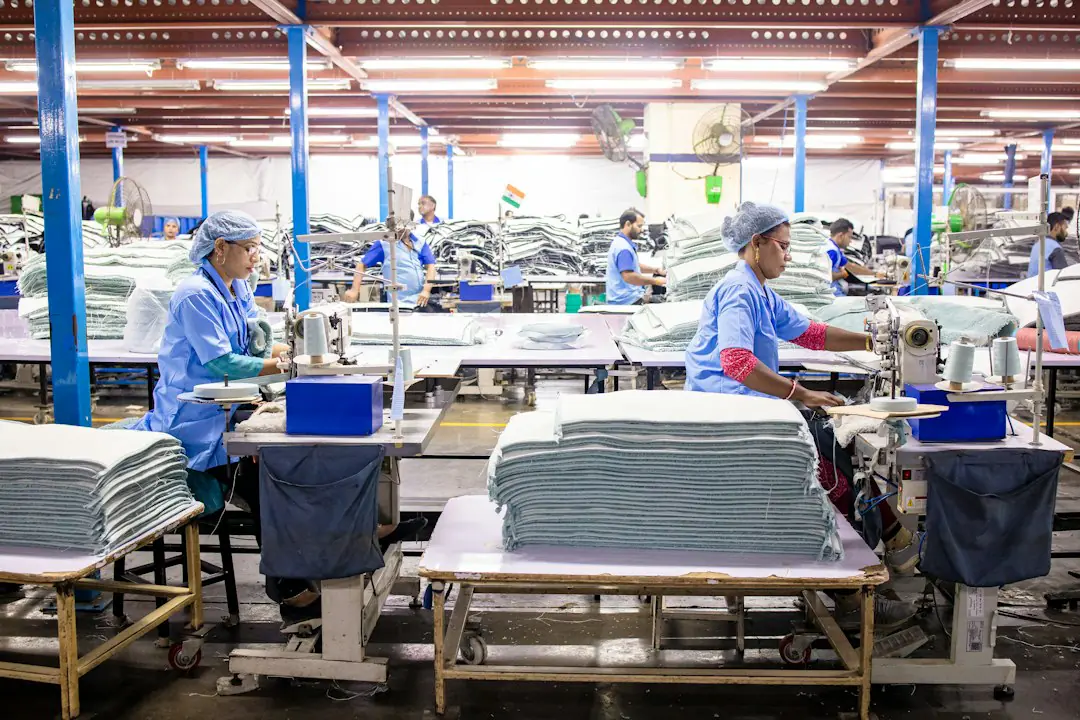
An apparel manufacturer handles the physical transformation of raw fabric into finished clothing, built to your specifications. That includes fabric sourcing, pattern making, sample development, cutting, stitching, decoration (printing and embroidery), labeling, quality control, and packing. A full-service factory manages every step under one roof rather than outsourcing pieces to third-party vendors who may not follow your spec sheet.
The distinction matters because many suppliers present themselves as manufacturers when they are actually trading companies or intermediaries. They take your order, mark up the price, and pass it to an undisclosed factory. You lose control over quality, communication, and production timelines. A real apparel manufacturer can answer technical questions about GSM, stitch construction, shrinkage tolerance, and print durability without deflecting to vague reassurances.
OEM vs ODM vs Private Label: Know the Difference
OEM (Original Equipment Manufacturing) means the factory builds garments from scratch using your tech pack, measurements, fabric specs, and artwork. You control every variable. This is the right path for brands with a specific design vision that cannot be achieved with stock blanks.
ODM (Original Design Manufacturing) means the factory offers existing designs or templates that you customize with your branding, colors, and minor modifications. This is faster and cheaper but limits creative control.
Private label sits in between. The factory produces garments using their established patterns and fabrics, then applies your neck labels, woven tags, hang tags, and branded packaging. You get a retail-ready product without the development cost of a fully custom build. For brands evaluating this path, our breakdown of custom hoodie manufacturing for USA brands covers the private label details you should specify before sampling.
Core Services: From Pattern Making to Final QC

A competent apparel manufacturer provides a sequential production pipeline with checkpoints at every stage. Here is what that pipeline should include, and what each step means for your brand.
Step 01: Design Review and Material Selection
Production begins with your tech pack or reference sample. Our in-house team reviews fabric composition, GSM target, fit silhouette, color requirements (Pantone codes), artwork files, rib specifications, trims, and branding details. If your tech pack is incomplete, a good manufacturer will flag the gaps and help you fill them rather than guessing and producing something off-spec.
Fabric selection is where product quality is decided. For streetwear hoodies, 380 to 500 GSM cotton fleece delivers the heavyweight structure and hand feel that customers associate with premium drops. For performance sportswear, 140 to 180 GSM polyester micro-mesh with moisture-wicking finish handles sweat and ventilation. A manufacturer that cannot discuss GSM ranges and fabric construction in detail is a red flag.
Step 02: Pattern Making and Sample Development
Pattern making translates your design into graded size sets. Digital CAD pattern digitization ensures consistency across sizes from XS to 5XL. Once the pattern is locked, the factory creates a physical pre-production sample. This is the garment you inspect, wear-test, and approve before any bulk fabric is cut.
At Mamoon Wear, we produce samples in 5 to 7 working days based on your tech pack. The sample lets you evaluate fabric feel, stitch density, color accuracy under real lighting, sizing grid, print or embroidery placement, and overall silhouette. Never skip this step. Brands that go straight to bulk without sample approval are the ones who receive 500 units that do not match their vision.
Step 03: Bulk Cutting and Stitching
After sample approval, bulk production begins. Fabric is laid, cut using precision pattern layouts, and assembled through structured sewing lines. Stitch construction matters more than most founders realize: flatlock stitching (4-needle 6-thread) reduces chafing on athletic garments, while double-needle coverstitching reinforces stress points on hoodies and sweatshirts. Reinforced bar-tack stitching at pocket corners and stress zones prevents tearing over time.
Step 04: Decoration and Branding Application
Printing, embroidery, and branding elements are applied after the garment is assembled. This stage includes screen printing, DTF, sublimation, puff printing, 3D embroidery, custom woven neck labels, hang tags, hem tags, and branded polybag packaging. The decoration method you choose should match both your fabric type and your brand positioning.
Step 05: Quality Control, Finishing, and Packing
Every garment undergoes multiple quality checks throughout production. Our QC team examines stitching integrity, measurement tolerances, color consistency against approved lab dips or strike-offs, print durability, label placement, and overall finishing. Items are polybagged, packed, and prepared for international shipping only after passing final inspection.
Key QC checkpoints include fabric approval, lab dip or color confirmation, print strike-off approval, pre-production sample signoff, inline sewing checks, measurement inspection, finishing review, and final packing verification. These checkpoints catch problems early, when they are fixable, instead of after the full order is complete.
Decoration Methods That Define Your Brand
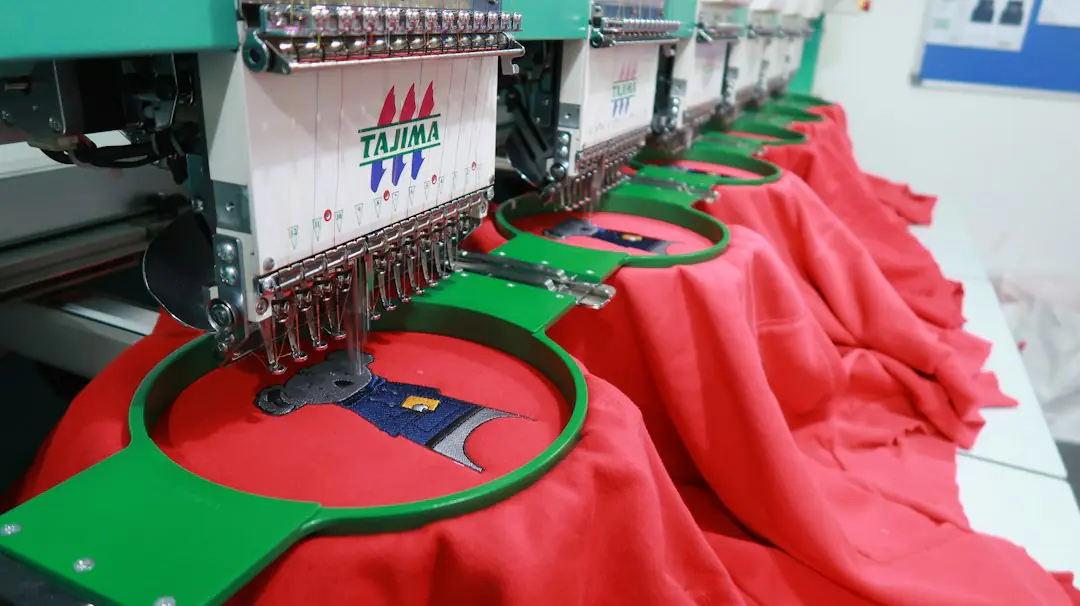
Decoration is not an afterthought. The print or embroidery method you choose signals quality and affects how customers perceive your brand. A heavyweight 400 GSM hoodie with a crisp 3D puff print feels different from the same hoodie with a cracked heat transfer. Here is how the main methods compare, and when to use each one.
Full Dye Sublimation
Sublimation fuses ink directly into polyester fabric fibers using heat and pressure. The result is vibrant, full-color, all-over prints that never crack, peel, or fade under repeated washing. This is the standard for sports jerseys, sublimated hoodies, and any garment requiring complex, edge-to-edge graphics. Sublimation works on polyester or poly-rich blends, not on 100% cotton.
Screen Printing
Screen printing pushes ink through mesh stencils onto fabric. It is the most cost-effective method for bulk runs of solid-color graphics. Screen prints are durable, wash-resistant, and produce sharp, consistent results at scale. The trade-off is setup cost: each color requires a separate screen, so complex multi-color designs on small runs can get expensive.
Direct-to-Film (DTF)
DTF prints your design onto a special film, then heat-presses it onto the garment. DTF handles intricate, full-color artwork with fine detail and gradients that screen printing cannot achieve. It works across fabric types (cotton, blends, polyester) and is efficient for smaller runs where screen setup costs do not make sense. DTF prints are durable but slightly less breathable than sublimation since the ink sits on the surface.
Puff Printing
Puff printing creates a raised, 3D tactile effect by mixing a puff additive into the ink that expands under heat. This adds depth and texture to logos, typography, and statement graphics. Puff print is popular in streetwear because it gives a premium, dimensional feel that flat prints cannot match. It works best on cotton-rich fabrics with enough surface area for the raised effect to be visible.
3D Puff Embroidery
3D puff embroidery uses foam underlay beneath high-density stitching to create a raised, sculpted logo. This is the most premium decoration method for brand logos on hoodies, jackets, and caps. The texture and durability of embroidered branding signals quality in a way that printed logos cannot. Flat embroidery is the standard option, while chenille embroidery produces the soft, fuzzy texture associated with varsity patches and letterman jackets.
| Method | Best For | Fabric Compatibility | Durability | Cost Efficiency |
|---|---|---|---|---|
| Sublimation | All-over graphics, jerseys, team uniforms | Polyester / poly blends | Excellent (ink fused into fiber) | High for polyester garments |
| Screen Printing | Bulk solid-color graphics, logos | Cotton, blends, polyester | High (wash-resistant) | Best at scale (300+ units) |
| DTF | Full-color detailed artwork, small runs | All fabric types | Good (heat-bonded film) | Best for low-MOQ runs |
| Puff Printing | 3D streetwear logos, statement text | Cotton-rich fabrics | Good (raised surface) | Moderate |
| 3D Puff Embroidery | Premium brand logos, caps, hoodies | Fleece, twill, structured fabrics | Excellent (stitched) | Higher per-piece cost |
MOQ Realities: What 30, 100, or 500 Pieces Gets You

Minimum order quantity is the single biggest gatekeeper for startup brands. Most factories in Bangladesh require 1,000 to 3,000 pieces per style, Chinese factories typically start at 300 to 500, Vietnam sits at 200 to 500, and Turkey offers lower minimums at 100 to 300 but at higher per-piece cost, according to a country-by-country sourcing comparison. Pakistan-based manufacturers like Mamoon Wear start at 30 pieces per design and color, making it one of the most startup-friendly sourcing destinations available.
Low MOQ is not just about spending less money upfront. It is about testing your product in the real market before committing to a large production run. A 30-piece drop lets you validate fit, fabric feel, print quality, and customer response. If the product resonates, you scale up with confidence. If it needs adjustment, you have not lost a season’s budget on 1,000 units that miss the mark.
Here is what different order tiers typically mean in practice for custom apparel production:
| Order Quantity | What It Gets You | Best For | Per-Unit Cost |
|---|---|---|---|
| 30 to 50 pieces | Full custom build, sample-approved, private label branding, custom decoration options | Startup drops, market testing, capsule collections | Higher (low-volume premium) |
| 100 to 300 pieces | Continued customization with volume-based pricing benefits | Growing brands, seasonal drops, restocks | Mid-tier |
| 500+ pieces | Best volume pricing, full size runs, tiered pricing breaks | Established brands, wholesale orders, retail distribution | Lowest (scale pricing) |
One important note: MOQ flexibility should not mean quality compromise. A factory that offers 30-piece minimums should still follow the same tech pack, produce a pre-production sample, and run quality checks before shipping. If a supplier offers low MOQ but skips sampling or QC, the low price is buying you problems. For brands specifically evaluating low-MOQ activewear production, our activewear manufacturing guide for startups breaks down what to expect.
Lead Times, Incoterms and Shipping to USA, UK, EU, UAE, AU
Lead time is the total elapsed time from sample approval to finished goods arriving at your warehouse or fulfillment center. It includes fabric sourcing, cutting, stitching, decoration, QC, packing, and international shipping. Understanding each component lets you plan your launch calendar with realistic margins instead of hoping for the best.
Typical Production Timelines
At Mamoon Wear, sample development takes 5 to 7 working days. Bulk production runs 12 to 15 working days for standard programs after sample approval. More complex builds with custom washes, multiple print placements, chenille patches, or extensive private label work may extend to 18 to 21 days. Production lead time depends on fabric availability, decoration complexity, quantity, and whether labels and packaging are custom-made.
Shipping Methods and Incoterms
For international orders, express air freight via DHL or FedEx delivers door-to-door in 4 to 6 business days to the USA and EU. This is the standard for startup and mid-volume orders where speed matters more than freight cost. Transit times to the UK, UAE, and Australia are similar but may vary, so check with the factory for current estimates to your destination. Sea freight is available for larger orders where the per-unit shipping cost drops significantly, with transit times of 25 to 40 days depending on destination port.
On incoterms, most startup-focused manufacturers offer DDP (Delivered Duty Paid), which means the factory handles shipping, customs clearance, and delivery to your address. You pay one quoted price and receive the goods at your door. FOB (Free on Board) is common for larger orders where you or your freight forwarder take responsibility for shipping and customs from the origin port onward.
Sourcing Regions: Honest Trade-Offs
Where you manufacture affects cost, speed, MOQ flexibility, and product specialization. Here is an honest breakdown of the five major apparel sourcing regions, based on a country-by-country sourcing comparison:
| Country | Typical MOQ | Lead Time | Strength | Trade-Off |
|---|---|---|---|---|
| Pakistan | 30 to 50 pcs | 12 to 15 days | Low MOQ, custom OEM/ODM, low labor cost | Verify factory capabilities for complex textile requirements |
| China | 300 to 500+ pcs | 30 to 45 days | Complete supply chain, any product type, fastest sampling | US tariffs (Section 301), rising wages, higher MOQs |
| Bangladesh | 1,000 to 3,000+ pcs | 90 to 120 days | Lowest per-unit cost for high-volume basics | Very high MOQ, long lead times, limited fabric self sufficiency for wovens |
| Vietnam | 200 to 500 pcs | 45 to 60 days | Sportswear, technical outerwear, performance apparel | Relies on imported fabrics, volatile US tariff situation |
| Turkey | 100 to 300 pcs | 20 to 30 days | Fast fashion, denim, EU proximity, low MOQ | Highest labor cost among these regions, less competitive for US buyers |
Pakistan’s textile and apparel exports have grown in recent years, with ready-made garments and knitwear as key drivers, according to reporting on Pakistan Bureau of Statistics data. The country’s manufacturing wages are among the lowest globally, well below those in China and Turkey. That cost advantage, combined with low-MOQ flexibility and deep knitwear expertise, is why Pakistan remains a preferred destination for emerging brands. For a detailed look at Pakistan’s manufacturing landscape, see our sportswear manufacturers in Pakistan sourcing guide.
10 Questions to Ask Before Signing a Production Contract
Before you commit to any apparel manufacturer, run through these ten questions. The answers tell you whether the factory can actually execute your project or whether they will learn on your dime. If a supplier cannot answer these clearly, move on.
- Can you manufacture from a full tech pack? If the answer is “send us a picture and we will figure it out,” you are dealing with a middleman, not a manufacturer. A real factory reads measurement charts, seam instructions, and Pantone codes.
- What is your sample development process and lead time? You need to know how long sampling takes, whether samples are charged or included in bulk pricing, and how many revision rounds are included.
- What is your minimum order quantity per design and per color? Get the exact number, not a range. Confirm whether size breakdowns are flexible within the MOQ or whether each size has its own minimum.
- What GSM and fabric options do you recommend for my product? A manufacturer with real expertise will ask about your target customer, season, price point, and desired hand feel before recommending a fabric. Generic “we have good quality fabric” is useless.
- Which decoration methods do you handle in-house? If printing or embroidery is outsourced, ask who does it, where they are located, and how quality is controlled. Outsourcing is not necessarily a dealbreaker, but you need transparency.
- What private label elements do you provide? Confirm neck labels, woven labels, hang tags, hem tags, custom patches, polybag branding, and barcode labeling. Get samples of each before approving bulk.
- What is your bulk production lead time after sample approval? Get a working-day estimate with qualifiers about complexity. Ask what factors extend lead time and how the factory communicates delays.
- What shipping terms do you offer? Confirm whether DDP shipping is available to your country, which couriers are used, and estimated transit times. Ask whether sea freight is an option for larger orders.
- How do you manage quality control? Ask about inspection checkpoints, measurement tolerances, color fastness testing, and what happens if defective units are found. A factory with a real QC process will describe specific checkpoints, not just say “we check everything.”
- What information do you need for an accurate quote? A professional manufacturer will ask for product type, quantity, fabric preference, GSM, size breakdown, artwork files, decoration method, branding details, and shipping destination. Vague quotes based on incomplete information lead to price revisions and delays later.
Start Your First Production Run
Finding the right apparel manufacturer comes down to three things: can they follow your tech pack, do they offer sample-before-bulk development, and are their commercial terms transparent enough to plan around. If a factory cannot answer technical questions about GSM, stitch construction, decoration methods, and QC checkpoints, they are not the right partner for a brand that cares about product quality.
Send us your tech pack, logo artwork, and desired quantities. Our in-house team will review your specs, create custom samples in 5 to 7 days, and guide your brand through smooth bulk production. Whether you are starting with a 30-piece capsule or scaling to 500-plus units, request a quote through our custom inquiry form or contact us on WhatsApp to start the conversation.
Frequently Asked Questions
Common questions from founders evaluating apparel manufacturers, answered directly.
What does an apparel manufacturer do?
An apparel manufacturer transforms raw fabric into finished, branded garments according to your tech pack. This includes fabric sourcing, pattern making, sample development, cutting, stitching, decoration (printing and embroidery), private label branding, quality control, and international shipping.
What is the minimum order quantity for custom apparel manufacturing?
MOQs vary by country and factory. Pakistan-based manufacturers like Mamoon Wear start at 30 pieces per design and color. Chinese factories typically require 300 to 500, Bangladesh demands 1,000 to 3,000, Vietnam starts at 200 to 500, and Turkey offers 100 to 300. Low MOQ is ideal for startups testing the market before scaling.
How long does apparel manufacturing take?
Sample development typically takes 5 to 7 working days. Bulk production runs 12 to 15 working days after sample approval for standard programs. Express shipping via DHL or FedEx adds 4 to 6 business days to most international destinations. Complex builds with custom washes or extensive decoration may extend production time.
Which decoration method should I choose for my brand?
Sublimation is best for all-over graphics on polyester. Screen printing is cost-effective for bulk solid-color designs. DTF handles detailed full-color artwork on any fabric. Puff printing adds 3D texture for streetwear logos. 3D puff embroidery delivers the most premium finish for brand logos on hoodies and caps. The right choice depends on fabric type, design complexity, and brand positioning.
How do I evaluate an apparel manufacturer before signing a contract?
Ask whether they can manufacture from a full tech pack, what their sample process and lead time are, their exact MOQ per design and color, which decoration methods are handled in-house, what private label elements they provide, their bulk production timeline, shipping terms, QC checkpoints, and what information they need for an accurate quote. A factory that cannot answer these clearly is a risk.